Reads your code like a senior engineer. Annotates like one too.
Every pull request gets four independent passes — semantic drift, test gaps, API contracts, and PR velocity — consolidated into inline annotations in your existing GitHub or GitLab diff. No separate dashboard required. No CI changes needed.
Logic errors linters can't see
DevPulsr reads your diff with its surrounding context — function signatures, calling conventions, module invariants, data flow assumptions. It catches the class of errors that require understanding program intent: wrong null handling, off-by-one logic, implicit type coercions, violated preconditions, and behavioral regressions that look structurally fine but break semantically.
discount > 0 to discount >= 0 causes applyDiscount(total, 0) to fire, which may zero-out promotional pricing logic downstream. Verify intent.Coverage numbers lie. Path coverage doesn't.
90% line coverage can hide entire logical branches that are never exercised. DevPulsr maps your changed code to your test suite at the path level — not the line level. It identifies specific branches, conditions, and error paths introduced by the PR that have no corresponding test assertion. The result is an actionable list of what to test, not a vanity percentage.
Breaking changes caught before your consumers notice
DevPulsr parses your OpenAPI specs, GraphQL schemas, and gRPC proto files and compares them against the previous revision on every PR. It flags backward-incompatible changes — removed fields, changed types, renamed endpoints, altered required parameters — before the merge. No waiting for downstream consumers to discover the break in staging.
currency → currency_code in POST /v1/invoices response. 3 known API consumers will break. Deprecate with alias or version the endpoint.Your team's review health, not just PR counts
PR cycle time trends, reviewer load distribution, repeat defect patterns by author, and time-to-first-review — surfaced as a team-facing dashboard, not a report for management. Engineers see their own metrics, managers see team patterns, and everyone can act on bottlenecks before they compound into sprint delays.
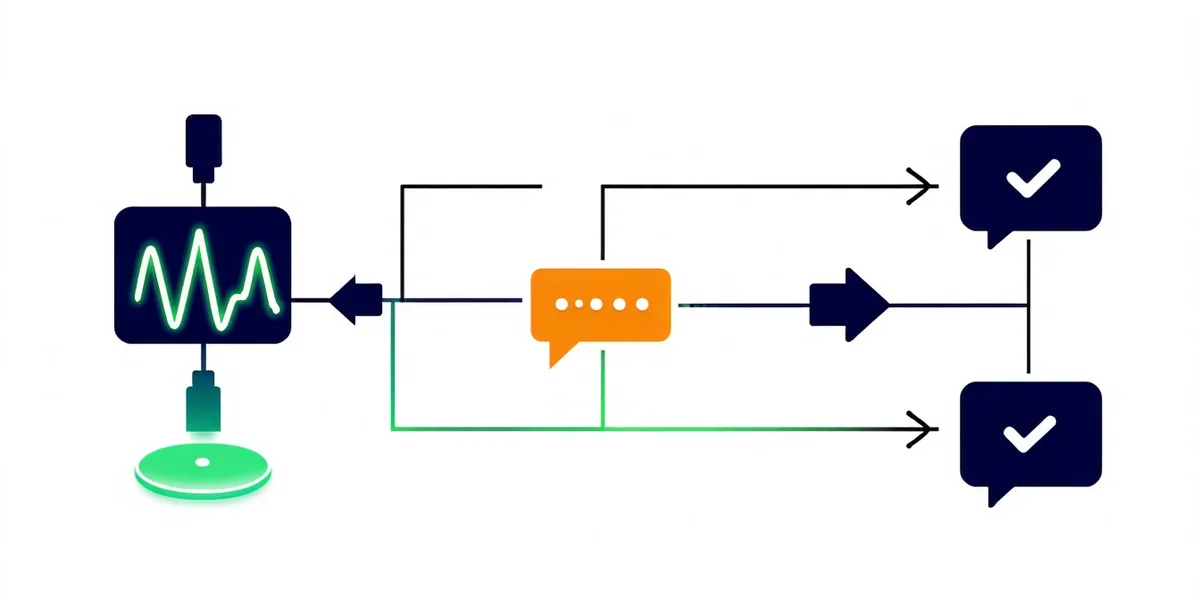
How the platform fits together
Repository code flows through the analysis engine and surfaces as annotations in your existing PR workflow.
Your code stays yours
DevPulsr analyzes code without retaining it. This is an architectural decision, not a policy — the system is designed so retention is not possible, not merely prohibited.
-
Code fetched per-analysis run into ephemeral compute — deleted immediately after findings are generated, never written to persistent storage
-
We do not train models on your code — analysis runs against a pre-trained call-graph model, your code is input only
-
SOC 2 Type II audit underway — results available under NDA to enterprise customers evaluating DevPulsr
-
Analysis runs in AWS us-east-1 — EU data residency option available for Enterprise plan customers
-
Read-only GitHub/GitLab OAuth — no write access to code, no admin access, no secrets access
Ready to see it on your actual PRs?
Install the GitHub App and run DevPulsr on your next PR in under 10 minutes.